Coal under the Choctaw Nation had been known for decades before anyone found a market for it. James J. McAlester, who had business at the crossroads where the California road met the Texas Road, married into the Choctaw Nation in 1872, which gave him legal access to the deposits, and showed a wagonload of the coal to officials of the Missouri, Kansas and Texas Railway at Parsons, Kansas. The Katy built through that year. The Osage Coal and Mining Company, which McAlester and partners founded, worked mines at Krebs and McAlester, and by 1888 the railroad owned it outright.
A town on leased land
Krebs began as a mining camp in Tobucksy County of the Choctaw Nation and took the name of a county judge there, Edmond Folsom Krebs, who was of Choctaw and German descent. Its first mine opened in 1875, and by 1895 fifteen were working nearby. English and Irish miners came first, then Italians, other Europeans and Mexicans recruited by the companies. The coal towns stood on land leased from the Choctaws, beyond the reach of government in many ways, and the Oklahoma Historical Society's history of the industry says the coal barons were, for all practical purposes, the law. From 1867 to 1906 the mines of Indian Territory were the most dangerous in the country, killing more than thirteen men for every million tons of coal, more than twice the rate across the line in Kansas.
January 7, 1892
At the Osage company's Mine Number Eleven a windy shot, a blast of black powder overloaded or badly tamped, threw sparks into the workings and set off an explosion that swept through the entire mine. One hundred men were killed and about two hundred injured, and the dead lay massed at the bottom of the shaft. It was then the third worst mine disaster in the United States. Afterward the federal government created a mine inspector's post for Indian Territory, and the inspector, the society's account says, mostly recorded disasters rather than preventing them. Mining went on. In 1898 the first local of the United Mine Workers in Indian Territory was organized at Krebs.
Little Italy
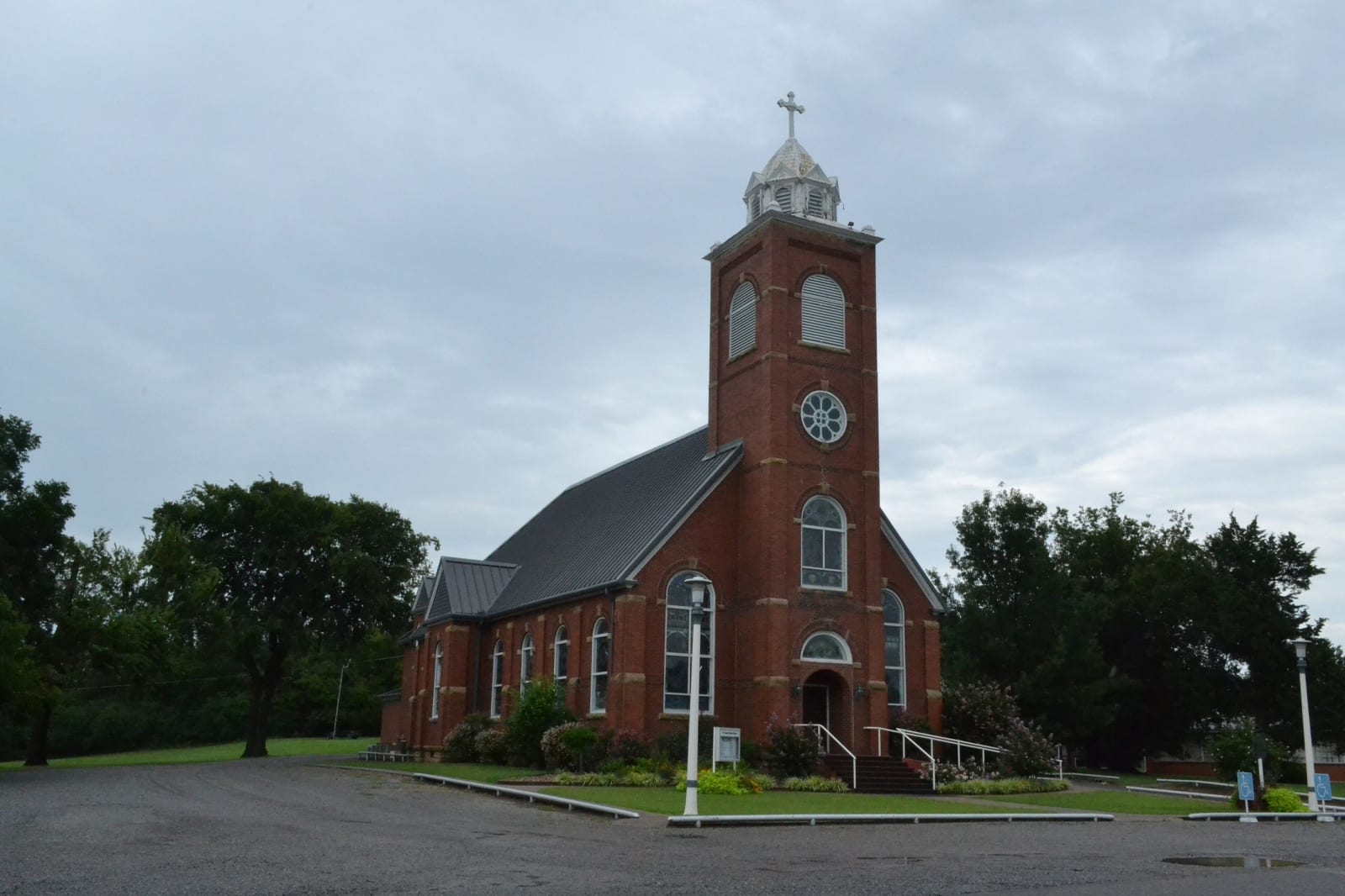
Most of the Italians who came to the Choctaw coal field were from northern Italy, nearly three in four of them from the Piedmont region, and Krebs became the principal Italian colony in the state. In 1910 Pittsburg County had 1,398 Italian-born residents. Widows of men killed underground took in boarders, and mutual aid societies such as the Dante Alighieri helped where they could. When oil replaced coal the mines declined, and in 1926 two hundred Italian families left Krebs for Akron, Chicago, Detroit and other cities. Those who owned land stayed. The brick St. Joseph's Catholic Church of 1903 still stands, and so do Lovera's market and the Italian restaurants that let the town call itself Oklahoma's Little Italy.