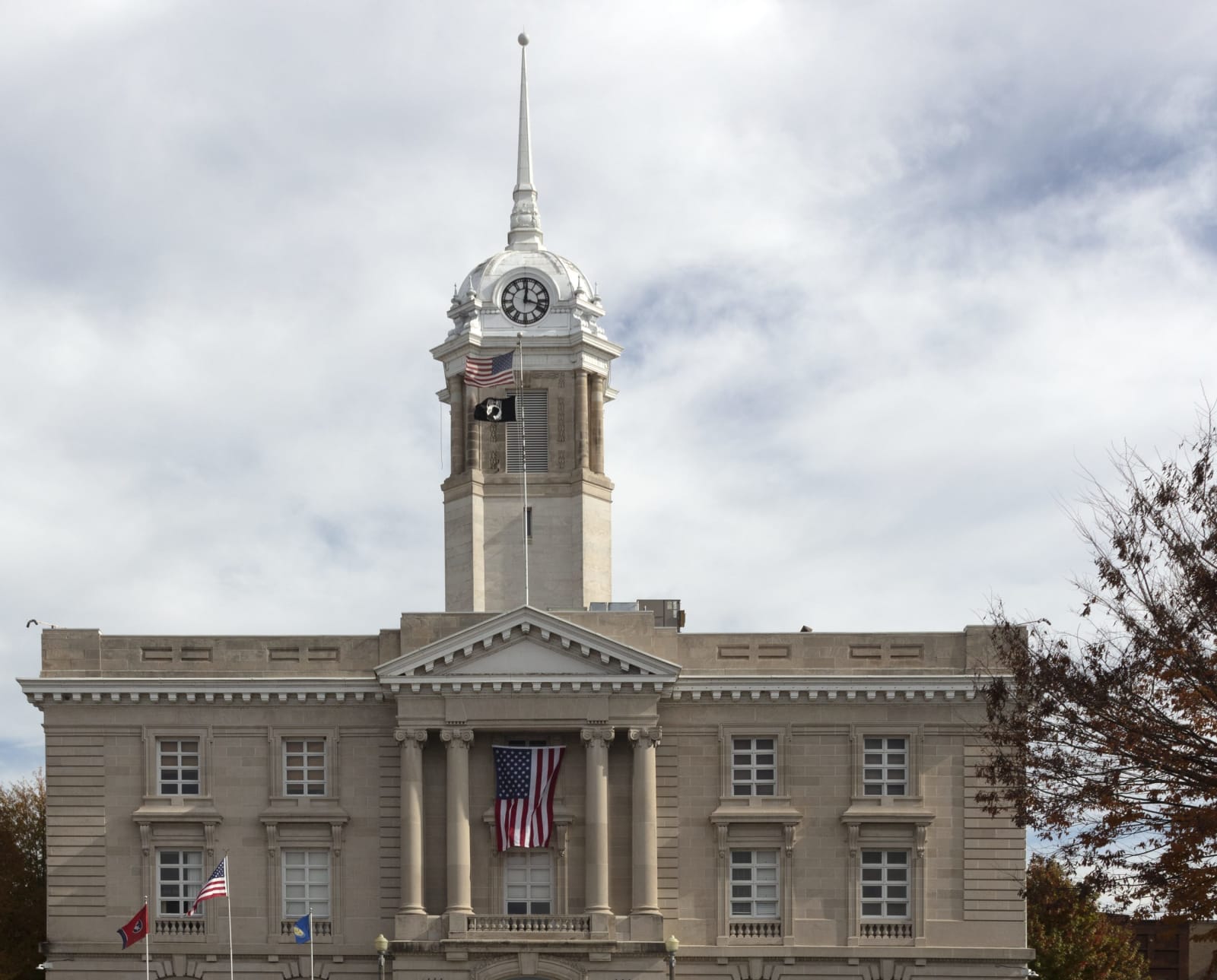
In November 1946 Thurgood Marshall left Columbia, Tennessee, for the last time. For months he had defended Black men charged after the February clash on the Mink Slide, working with two Tennessee lawyers, Z. Alexander Looby of Nashville and Maurice Weaver of Chattanooga. More than 100 Black residents had been arrested in the sweep that followed, and on February 28 police killed two prisoners in custody, James Johnson and William Gordon. A local jury cleared the officers. Twenty-five men were tried at Lawrenceburg, and now the case was over. The three lawyers set out together for Nashville. A patrol convoy followed them.
The third stop
Police stopped the lawyers twice for alleged highway violations. The third time they arrested Marshall for drunk driving, put him in a patrol car and drove away. Marshall had not been drinking. A reporter, Harry Raymond, was riding with Looby and Weaver, and in Gilbert King's account the police told them to keep going to Nashville. Looby saw that the patrol cars were not heading back toward town and followed them down a dirt road. In King's telling the road led toward the Duck River, where Marshall saw a group of white men waiting by a tree. Raymond said, "They're going to lynch Thurgood Marshall."
When the men by the river saw the second car's headlights, the police gave up whatever they had planned. They drove Marshall back to Columbia, to a magistrate's office, where the charge was dropped. Raymond later concluded that a lynching had been planned and that Marshall was the intended victim.
The man in the second car
Looby was born on April 8, 1899, in Antigua, and came to the United States in 1914. He studied at Howard, Columbia and New York University, taught economics at Fisk, and was admitted to the Tennessee bar in 1929. After three years in Memphis he returned to Nashville and helped found Kent College of Law, the city's first law school for African Americans since 1911. His defense in 1946 helped win acquittal for twenty-three of the twenty-five men tried at Lawrenceburg.
After the road
The lawyers asked friends in Columbia to see them safely to Nashville. By King's account, Black residents hid them in different cars and drove them out of town. Marshall's biographer Juan Williams wrote that he came away with "a newly found fear of white mobs and violent policemen." The historian Dorothy Beeler wrote that the episode and its aftermath helped build a base for the civil rights work of the 1950s and 1960s.
Looby stayed in Nashville and went into politics. In 1951 he and Robert E. Lillard became the first Black men elected to the city council since 1911. On April 19, 1960, dynamite destroyed his home on Meharry Boulevard while he and his wife, Grafta, were home. A few hours later sit-in protesters and community supporters marched from North Nashville to the courthouse steps. No one was ever charged. He retired from the Metropolitan Council in 1971, after about twenty years in city office.
The Mink Slide tells the February night and the Lawrenceburg trial. The Duck River flows on past Henry Horton State Park.