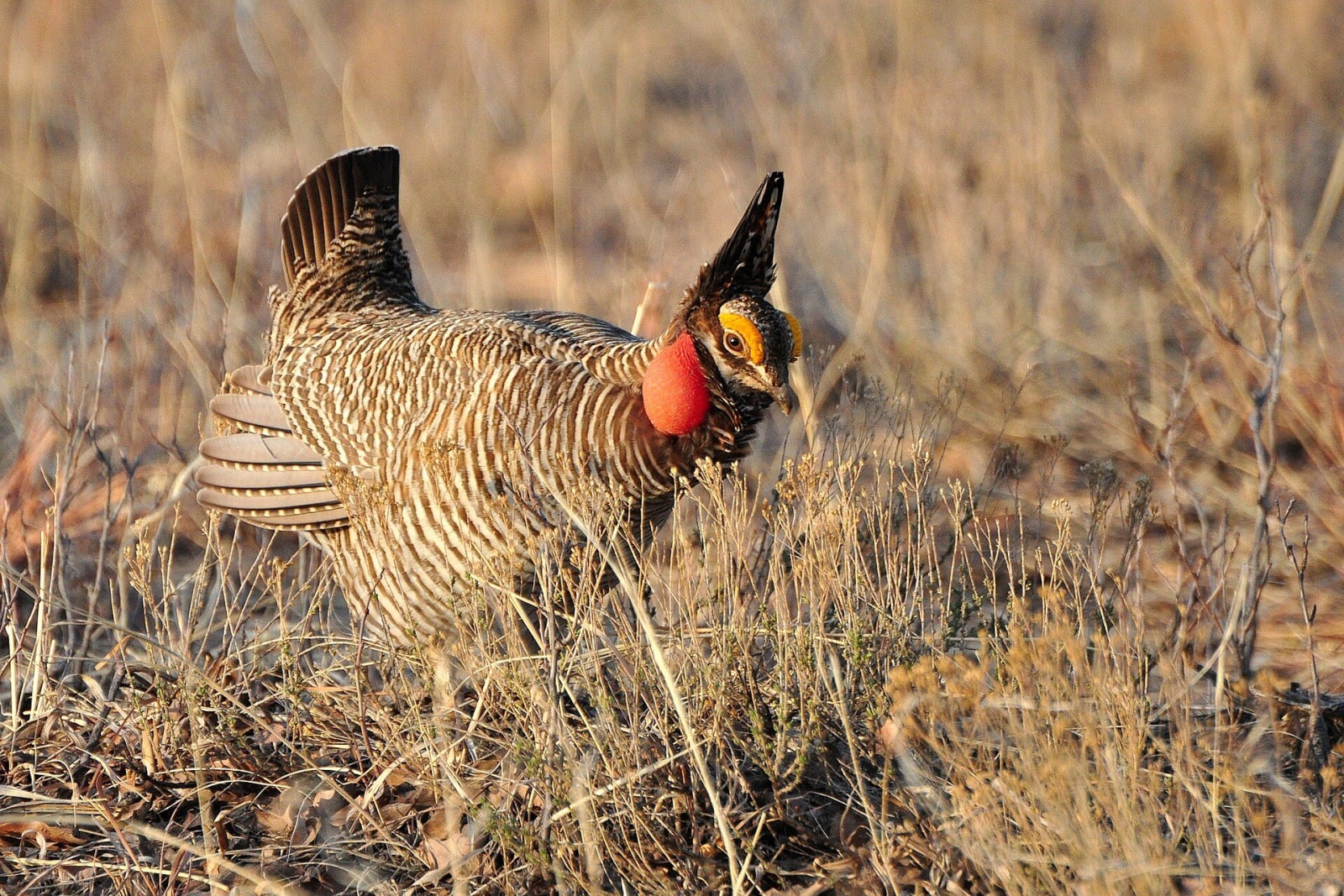
In the sandy country of far western Oklahoma, much of the ground is held by an oak that rarely grows taller than a person. Shinnery oak, Quercus havardii, usually stands three to six feet high and shares the ground with mid and tall grasses that are often taller than it is. It is native to western Oklahoma, west Texas, eastern New Mexico and two small patches of southwest Kansas, and it grows on deep sand.
An oak below ground
What shows is the least of it. At least ninety percent of a shinnery oak's mass is underground, in woody rhizomes up to six inches thick that run through the top two feet of sand and in shifting dunes have been found thirty feet down. The stems above ground live eleven to fifteen years, and the plant beneath them goes on. A single clone can spread over two hundred acres, and clones have been reported more than 13,000 years old. It sprouts back quickly after fire. Its spring buds and leaves are poisonous to cattle for several weeks, and boll weevils winter in its litter near cotton fields, so most of the research on it has been about killing it, and chemical and mechanical clearing has likely shrunk its range. Clearing it outright also opens the sand to the wind.
The gobbling grounds
The bird most tied to it is the lesser prairie-chicken, a stocky grouse about a quarter smaller than its tallgrass cousin. In April and May the males gather on open rises with short grass, the leks, raise the long feathers on their necks, inflate reddish air sacs and stamp and call. The greater prairie-chicken's leks are booming grounds. The lesser's higher, bubbling calls gave its leks the name gobbling grounds. Hens nest in a shallow scrape lined with grass and feathers under brush or tall grass, lay eleven to fourteen eggs, and raise chicks on insects.
The Oklahoma Historical Society's account puts the species' decline at 97 percent since the 1800s, with a 78 percent loss of occupied range since 1963, and holds that about ten thousand acres of unbroken prairie are the least that will keep a prairie chicken population going. In Oklahoma the birds now live in sand sage, shinnery oak and mixed and shortgrass country in the west and the Panhandle. About half of all that remain are in western Kansas.
In and out of court
The legal history has swung back and forth. The U.S. Fish and Wildlife Service listed the species as threatened in 2014, and a court vacated the listing in 2015. In November 2022 the service listed a northern population, which includes Oklahoma, as threatened and a southern one as endangered. Congress voted in 2023 to undo that listing, and the president vetoed the bill. In 2025 a federal judge vacated both listings. Through all of it the oak has kept its ground, most of it out of sight.