In August 1774, seventy-one delegates met at New Bern as North Carolina's First Provincial Congress. They pledged to stop trading in British goods and condemned Parliament's duties as illegal and oppressive. Two months later, in the port town of Edenton on Albemarle Sound, a group of women put their own names behind that pledge.
The paper of October 25
The document is dated October 25, 1774. The signers wrote that they could not be indifferent to anything touching the peace and happiness of their country, and that standing by the deputies' resolves was a duty they owed to their families and to themselves. They signed as a witness of their "fixed intention and solemn determination." The paper never mentions tea. That word came from an unnamed correspondent whose letter, dated October 27, explained that the province's deputies had resolved to drink no more tea and wear no more British cloth, and that many ladies had followed them.
Fifty-one names follow, among them Penelope Barker, Penelope Dawson, Jean Blair, Mary Blount, Sarah Valentine and Anne Horniblow; Elizabeth Roberts appears three times. The Virginia Gazette printed the resolves with the names on November 3, 1774. London papers carried them in January 1775, the Morning Chronicle and London Advertiser on January 16.
Laughter in London
In London, Arthur Iredell read the papers and wrote on January 31, 1775, to his brother James, the customs comptroller at Edenton. He asked whether the town had a female congress too and joked that few places in America held so much female artillery. At least two signers were sisters of James's wife, Hannah Johnston Iredell. On March 25, 1775, the printers Robert Sayer and John Bennett published a mezzotint attributed to Philip Dawe, A Society of Patriotic Ladies, at Edenton in North Carolina. It shows a woman being courted at the table, a neglected child on the floor and a leader drawn with a man's face. Historian Debra Michals argues that the satire mocked colonial men as well, for letting the women run things.
Sorting the record
No one in North Carolina wrote the event down at the time. Around 1830 William T. Muse, a naval officer whose mother came from Edenton, brought home a copy of the print he had found in a barbershop on Minorca, and it hung in the county courthouse. The name Edenton Tea Party took hold afterward. Later accounts put fifty-one women around a table at the house of Elizabeth King. The state's marker essay counts the King house too small for such a crowd, and historian Cynthia Kierner found no King residence in Edenton's 1774 tax lists.
Tradition credits Penelope Barker, born in Edenton in 1728 and three times married, with organizing it. The 1774 papers name no leader, though Kierner accepts Barker's part, and the state's 1940 marker names her. Her husband Thomas had been in London as the colony's agent since 1761 and did not come home until 1778.
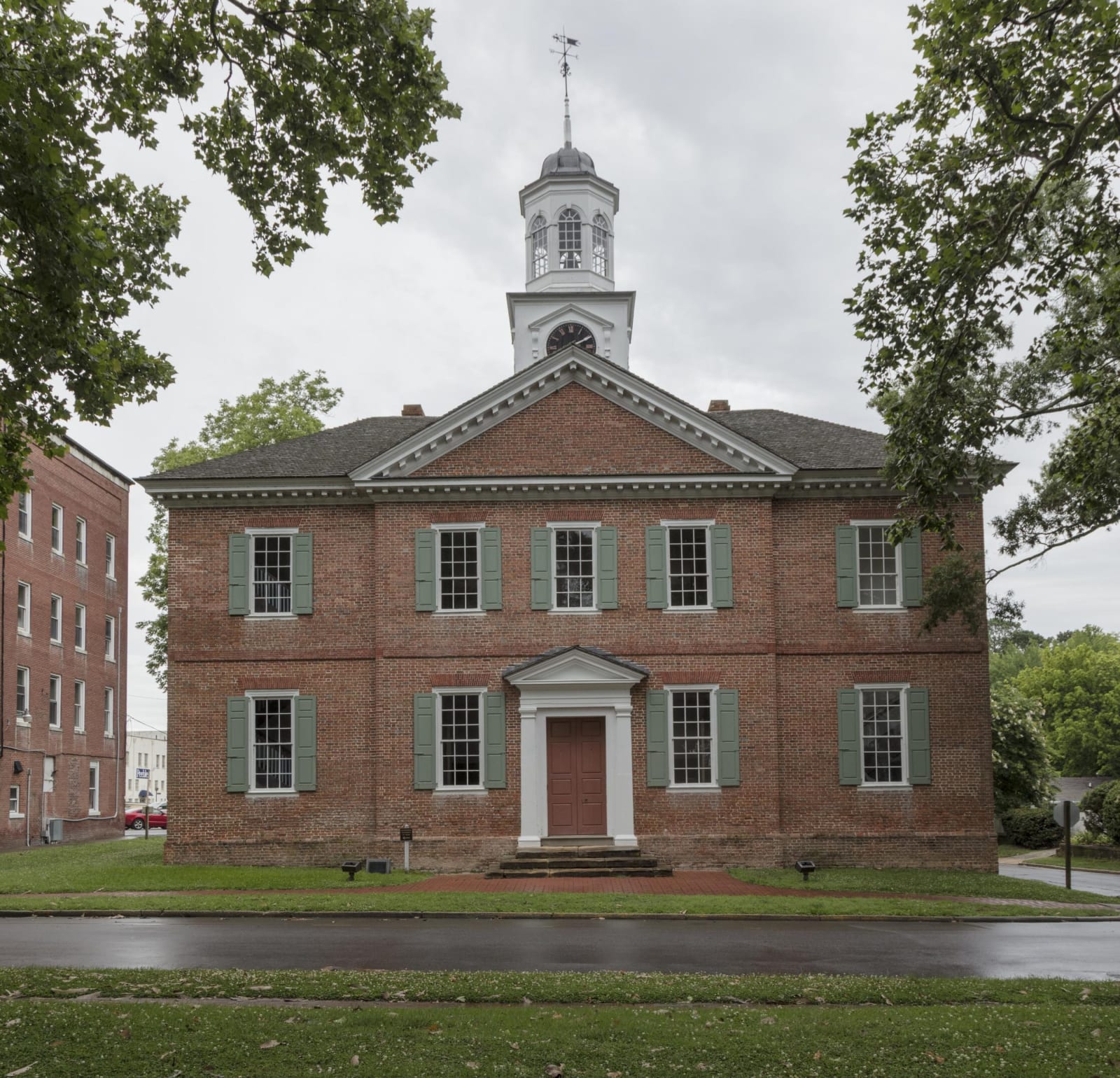
The 1767 Chowan County Courthouse, where Muse's print once hung, faces the green in Historic Edenton. A bronze teapot on a Revolutionary-era cannon stands just off that green, and the Barker House, moved to the waterfront in 1952, serves as the visitor center.