
Uvalde, the Nueces Canyons & Fort Clark
The Frio and Nueces canyons, Garner State Park, Uvalde and John Nance Garner, Fort Clark and the Seminole Negro Indian Scouts, Fort Duncan at Eagle Pass and the Devil's Sinkhole.
South of the Edwards Plateau the Hill Country breaks down into brush country, and the rivers that leave it, the Frio, the Sabinal and the Nueces, run clear and cold through limestone canyons. US-83 follows the Frio from Concan to Leakey. Garner State Park, opened in 1941, has a swimming beach on the river and a summer dance on its pavilion, held for generations.
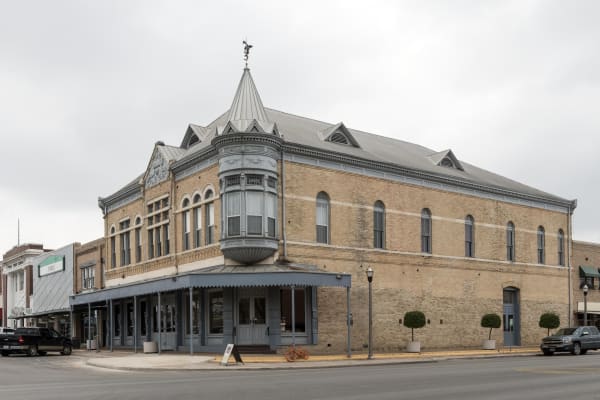
Uvalde, the county seat, was home to John Nance Garner, vice president under Franklin Roosevelt, and his house is the Briscoe-Garner Museum. To the west, Brackettville grew around Fort Clark, founded in 1852 at Las Moras Springs. From 1872 the fort was the base of the Seminole Negro Indian Scouts, descendants of Black Seminoles who had settled in Mexico, and four of them won the Medal of Honor. Their cemetery is a family burial ground, not a stop. The fort is now a resort community with a museum in the old guardhouse.
At Eagle Pass, Fort Duncan guarded the river crossing from 1849. The Kickapoo Traditional Tribe of Texas lives on its own land near the river there; it is a community, not a visitor site. In the north, Spanish missionaries founded San Lorenzo de la Santa Cruz in 1762 for the Lipan Apache at what is now Camp Wood, and the Devil's Sinkhole near Rocksprings shelters a summer colony of bats.
What to See in Uvalde, the Nueces Canyons & Fort Clark
9 places across the region, grouped by what they are.
Geology & Rock Formations
Natural Areas
Hikes & Trails
Historic Sites
Architecture
Uvalde, the Nueces Canyons & Fort Clark rewards the unhurried. Pick a base, fan out, and let the country between the headline stops surprise you.
← Explore more of Open Road Guide