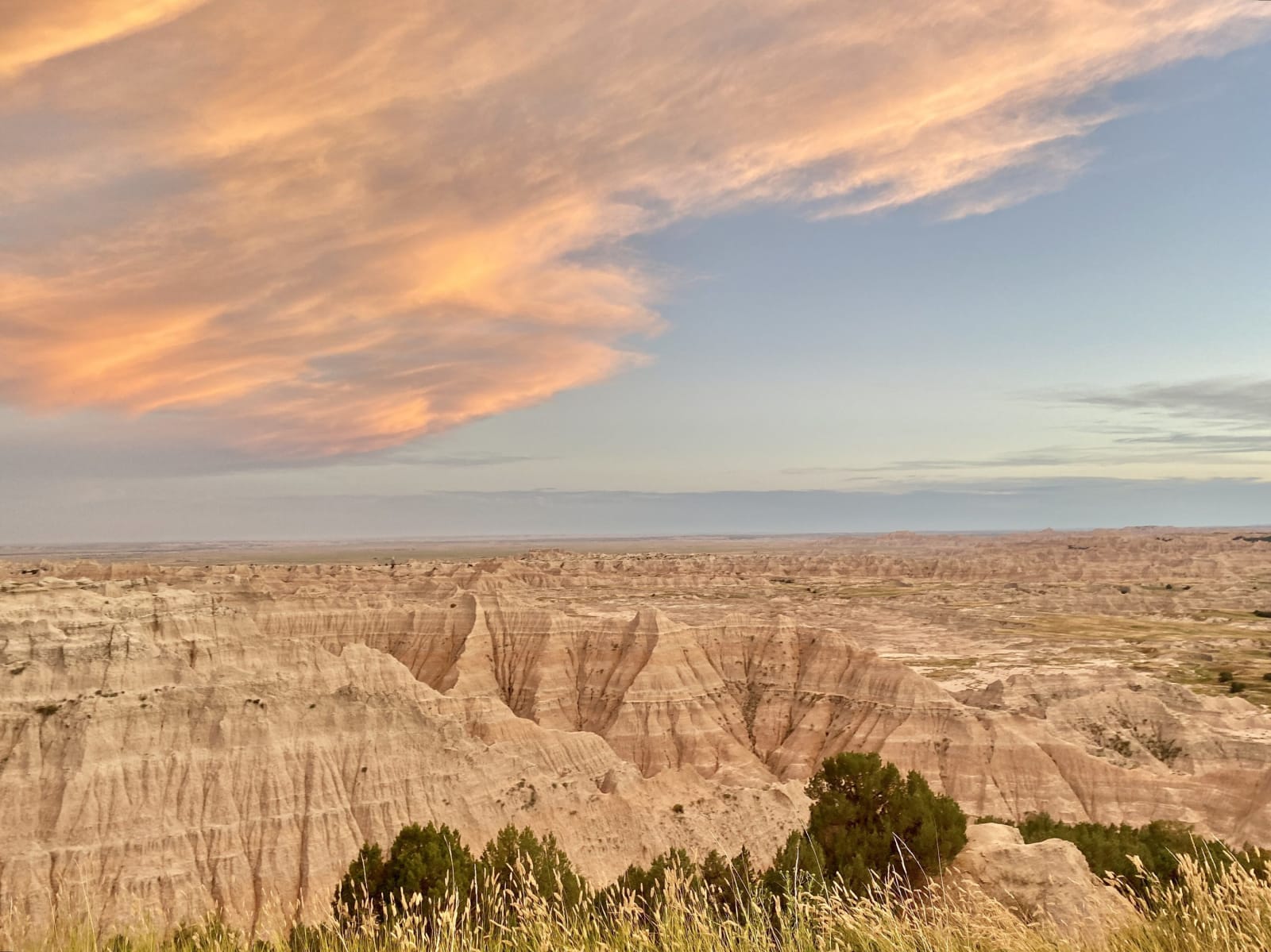
The Badlands & Pine Ridge
Makȟóšiča's eroded walls and fossil beds, the Stronghold where the Ghost Dance was danced, Wounded Knee, and a Cold War missile silo off I-90.
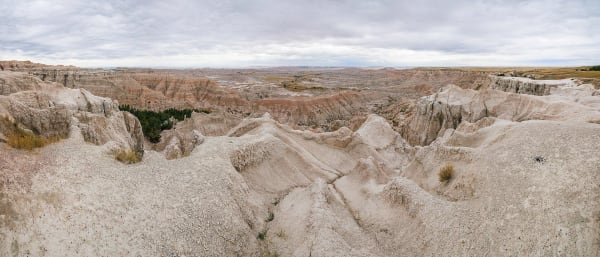
The Lakota called this country Makȟóšiča, bad land, and the name carried into every language that followed. The White River and its creeks have carved the plains into banded spires and gullies, and the soft layers keep giving up the bones of animals that lived here thirty million years ago. The North Unit along the Badlands Wall is the national park most visitors drive. The South Unit lies inside the Pine Ridge Reservation and is managed with the Oglala Sioux Tribe; in 1942 the military took it for a bombing range and moved some 125 Oglala families off their land, among them Dewey Beard, who had survived Wounded Knee.
In the hard winter of 1890 Ghost Dancers gathered on Stronghold Table. That December a band of Mnicoujou Lakota under Spotted Elk crossed the Badlands Wall toward Pine Ridge, and on December 29 the Seventh Cavalry, disarming them at Wounded Knee Creek, opened fire. Estimates of the Lakota dead run from 250 to 300, most of them unarmed and many of them women and children. They lie in a mass grave on the hill where the army's guns stood. In 1973 the American Indian Movement and Oglala people held Wounded Knee for seventy-one days.
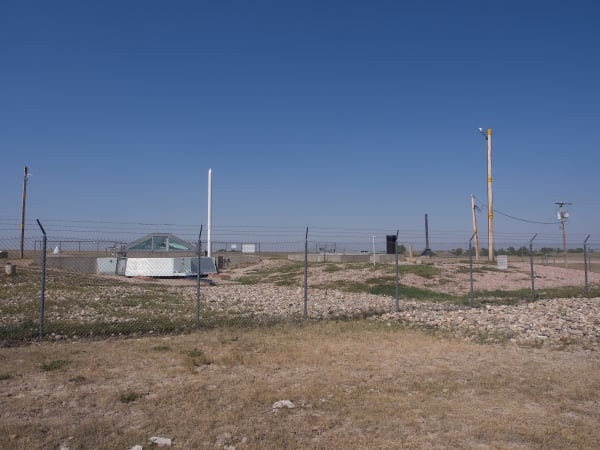
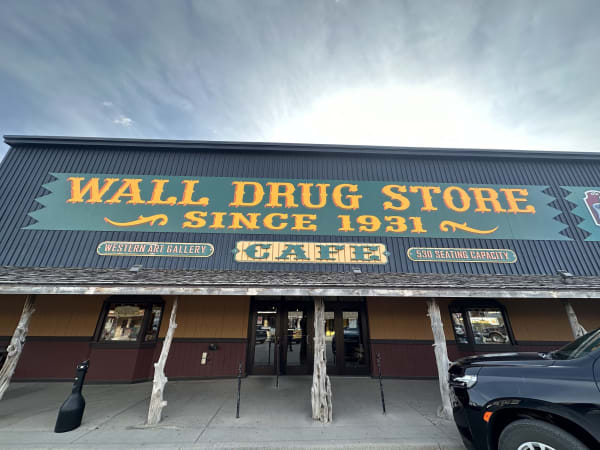
North of the park the Minuteman Missile site keeps a launch control center and a silo from the Cold War, and Wall Drug still gives away the water it has advertised since the 1930s.
What to See in The Badlands & Pine Ridge
5 places across the region, grouped by what they are.
Geology & Rock Formations
Historic Sites
Towns & Gateways

Roadside Stops
Scenic Drives through The Badlands & Pine Ridge
Stories from The Badlands & Pine Ridge
The Badlands & Pine Ridge rewards the unhurried. Pick a base, fan out, and let the country between the headline stops surprise you.
← Explore more of Open Road Guide