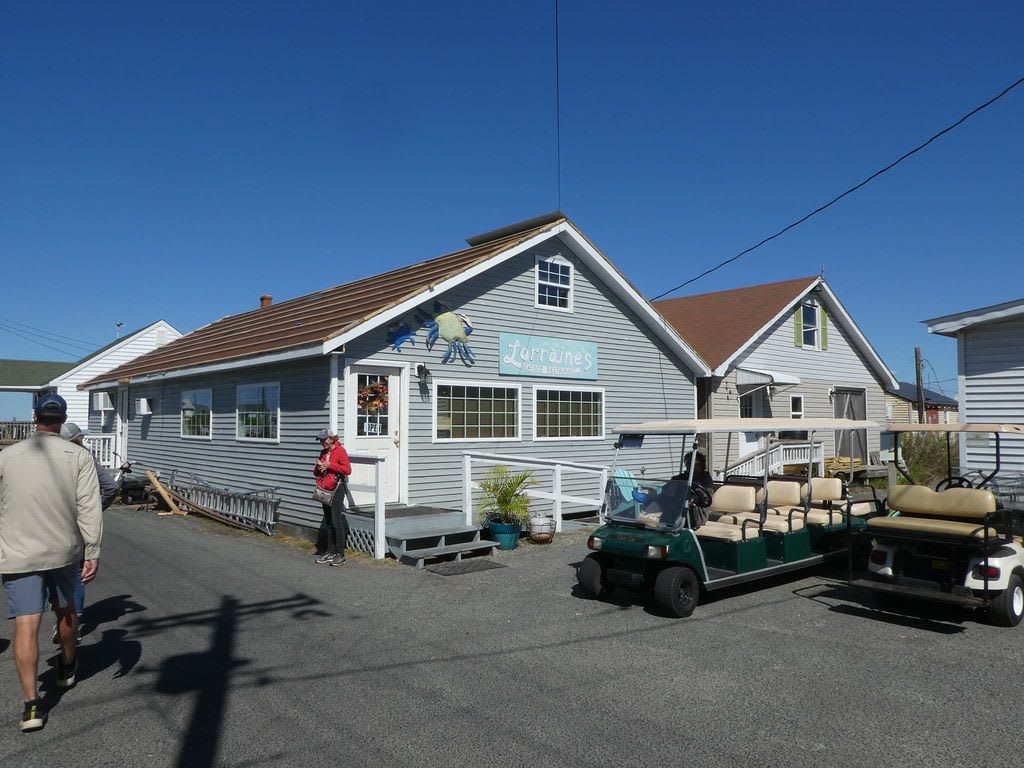
 Larry Syverson / CC BY-SA 2.0 via Flickr
The Story
Long before anyone lived on Tangier, people came out to it. Shell middens and stone points along its shore show that Native people of the Eastern Shore crossed to the island, probably in summer, for fish and shellfish, in dugout canoes, the largest of them about 70 feet long. John Smith sighted these islands in 1608, English patentees grazed livestock on them from the 1670s, and permanent settlers arrived about a century later. Their descendants, many named Crockett, Pruitt and Parks, turned from farming to crabbing and oystering in the nineteenth century, and the island still lives on the water, with a way of speaking all its own.
In 1814 the British made Tangier a base for their raids up the bay, including the attack on Washington, and built Fort Albion here with barracks, a hospital, a church and gardens. It was also a refuge. Enslaved people from the shores of the bay escaped to British lines and were sheltered here as free people, and some of the men enlisted in the Corps of Colonial Marines. When the British left in March 1815 they burned the fort and carried the refugees away rather than return them. Nothing of the fort survives; its ground has eroded into the bay.
The island has lost about two-thirds of its land since 1850 and continues to shrink. Passenger ferries run in season from Onancock, Reedville and Crisfield, Maryland. The Tangier Island History Museum on Main Ridge tells all of this. Some families bury their dead in their own yards, and those graves are private.
Visitor Info
On the Map
Nearby
The closest stops worth working into your route
Historical markers nearby
Roadside plaques and monuments within a short detour