 Billy Hathorn / CC BY-SA 3.0 via Wikimedia Commons
The Story
On March 28, 1905, brothers J. S. and W. A. Savage of West Virginia found oil at 1,556 feet, completing the first well in the Caddo Parish oilfield. By 1910 almost 25,000 people were working in and around Oil City, which became the first wildcat town in the Arkansas-Louisiana-Texas region, and the earliest local pipeline was finished that year. The American Oil and Gas Historical Society describes the museum as covering all of this, with photographs, films and life-size dioramas.
Caddo Lake has its own place in the story. Gulf Refining Company completed its Ferry No. 1 well on the lake in 1911, among the nation's earliest over-water oil wells. A historic marker calls it the world's first, but the Society disputes that, citing an earlier Ohio case from 1887. Another exhibit lets visitors try to break the log jam that stalled growth on the Red River; the Great Raft clogged the river for more than 400 miles north of Natchitoches, and 64 Parishes notes it created lakes including Caddo Lake.
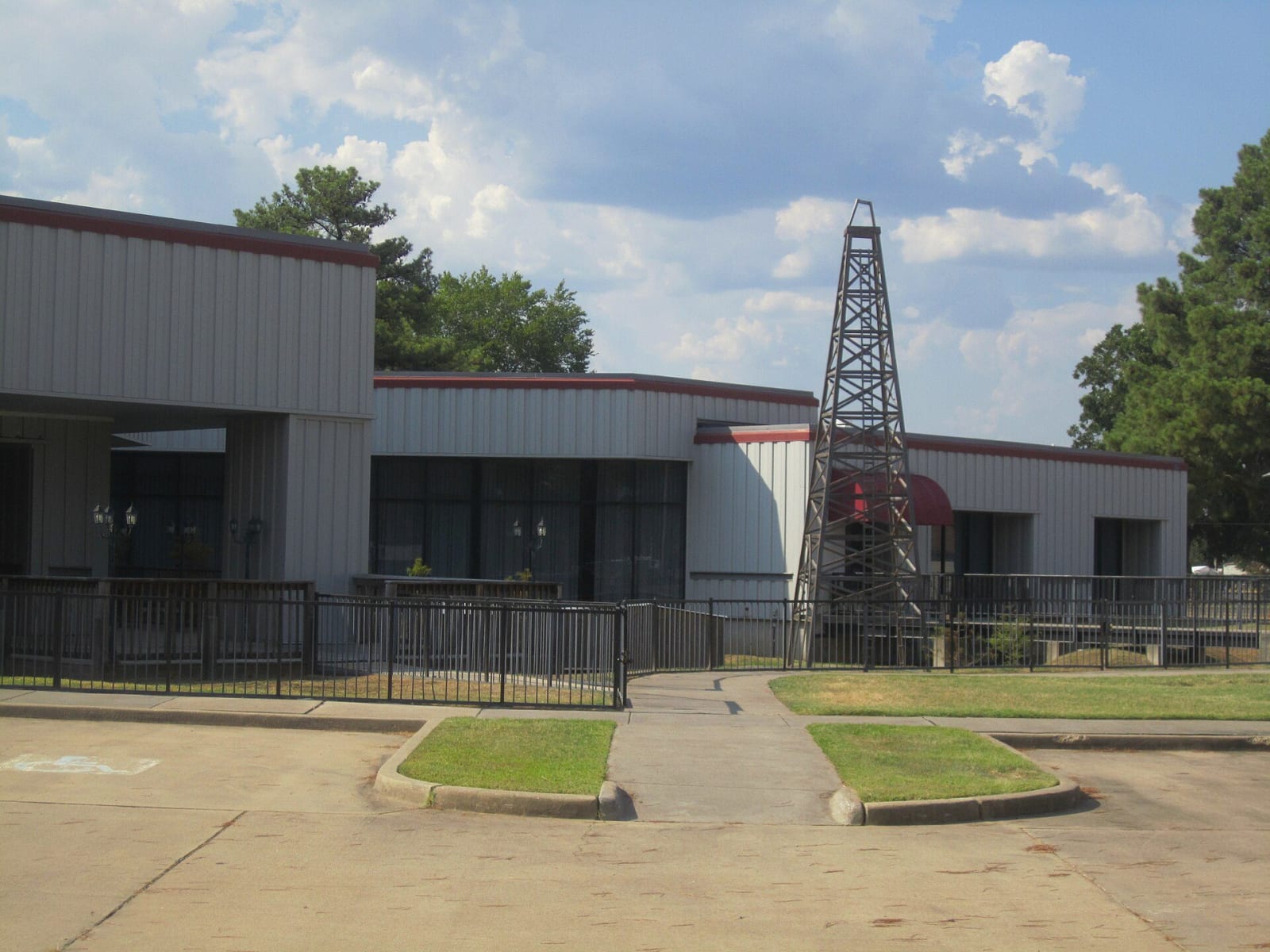
The museum began as the Caddo-Pine Island Oil and Historical Museum and was dedicated as the Louisiana State Oil and Gas Museum in May 2004, the first public museum in Louisiana devoted to petroleum. Outside are the former Kansas City Southern depot and a donated Chevron derrick, with rigs across the street. Inside, regional history starts with the Caddo Indians, and there is a local history library. It is at 200 S. Land Avenue and free; call 318-995-6845 for hours.
Visitor Info
On the Map
Nearby
The closest stops worth working into your route
Historical markers nearby
Roadside plaques and monuments within a short detour