 Carol M. Highsmith / public domain via Library of Congress
The Story
Astronomers chose this valley in 1955 because the mountains around it block radio noise and few people lived here. A National Radio Quiet Zone of some 13,000 square miles was set up in 1958 as building began, and the first telescopes were working by the fall of 1959. Radio telescopes gather radio waves rather than light, and a stray phone signal can swamp them, which is why the rules here still matter.
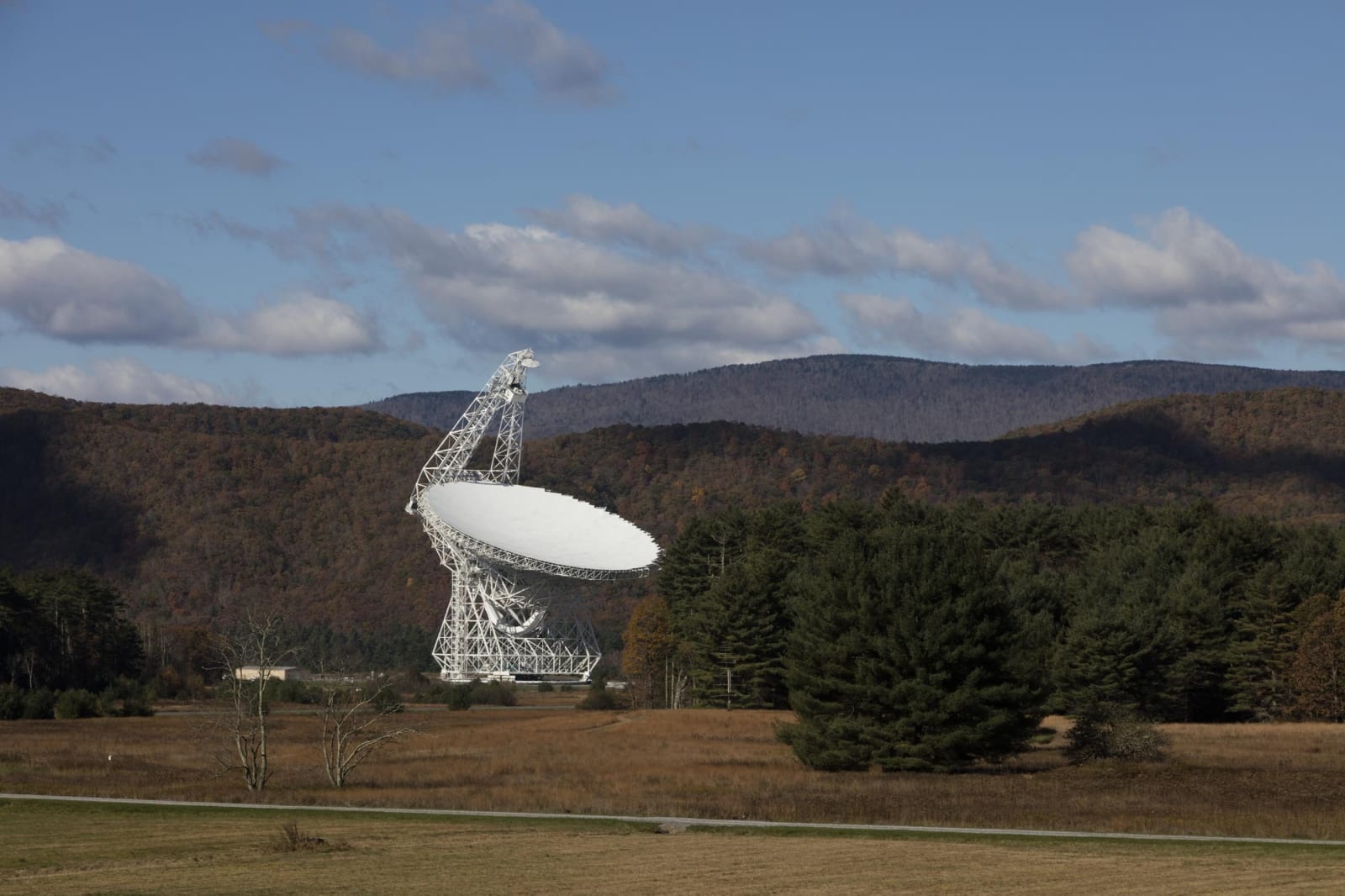
The search for radio signals from other civilizations began here, in April 1960, when Frank Drake turned the 85-foot Tatel telescope to the sky in Project Ozma. A 300-foot telescope began work in 1961 and collapsed in 1988. Its replacement, the Robert C. Byrd Green Bank Telescope, dedicated on August 25, 2000, is the largest fully steerable radio telescope in the world: a surface of 2,004 adjustable panels measuring 100 by 110 meters on a 16-million-pound frame. Near the Science Center stands the dish Grote Reber built in 1937, moved here in 1959-60 and now a National Historic Landmark.
Turn off Wi-Fi, Bluetooth and cellular data before you arrive. The grounds and trails are free and open daily from sunrise to sunset. The Science Center opens Thursday through Monday, and guided campus tours of about an hour leave on open days as space allows. Digital cameras may be used only around the Science Center and the observation deck; film cameras are welcome everywhere public.
Visitor Info
On the Map
Nearby
The closest stops worth working into your route
Historical markers nearby
Roadside plaques and monuments within a short detour